How to Estimate the Volume of Sealant Required in A Project?
Sealants are crucial for creating watertight and long-lasting seals in construction and home improvement projects. Accurately determining the amount of sealant needed can be tricky, often leading to delays or unnecessary waste – even for professionals. This guide offers practical methods to help you calculate sealant volume required for your project, saving you time and money.
Understanding the Basics
To estimate the volume of sealant required for a project, you’ll need to calculate the total volume of the spaces the sealant will occupy. It only involves 6 simple steps:
1. Determine the joint shape – whether it is closer to a rectangular (e.g. wall panel joint), triangle (e.g. window perimeter’s corner / fillet joint) or a trapezoid shape:
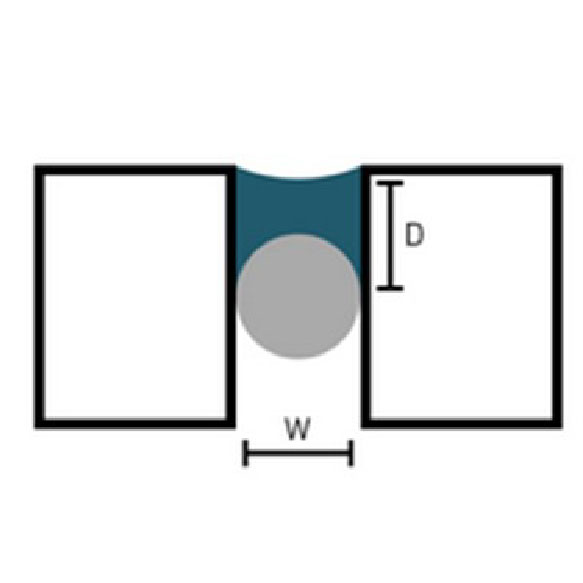
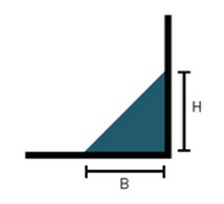
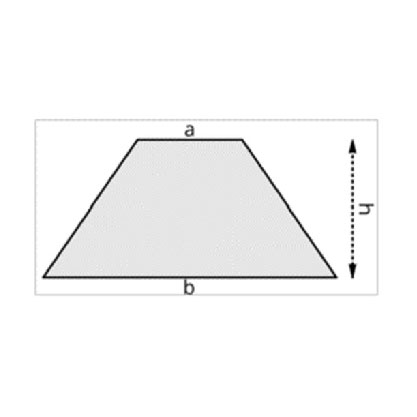
2. Determine the corresponding parameters in centimeters (cm) according to the joint shape.
2.1 For rectangular joint shape (hourglass, in fact), determine the width (W), depth (D)*, and length of the joint.
Volume = Width (W) x Depth (D) x Length
*Pay attention that the joint depth here refers to the sealant depth on the edge, not the center. Generally, for hour-glass sealant bead, when width:depth ratio in joint design is 2:1, the depth refers to the center of the joint. Edge depth can be about 2/3 of the width. Getting edge depth instead of center depth to calculate Volume, otherwise it will be underestimated.
2.2 For triangular joint shape, determine the base (B), height (H), and length of the expected sealant bead.
Volume = Base (B) x Height (H) /2 x Length
2.3 For trapezoid joint shape, determine the top length (a), bottom length (b), height (h), and length of the expected sealant bead.
Volume = [ (a+b) x h / 2 ] x Length
3. Calculate “Volume” per the corresponding formula. All “Volume” results will be expressed in milliliter (ml).
Determine the amount of inevitable wastage as a percentage, typically ranging from 10% to 20%. To account for, say, 20% wastage, add to the actual volume required by dividing the volume by 0.8.
Actual Volume = Volume / 0.8
4. Determine the volume per cartridge or sausage, in terms of milliliter (ml). Typically, it is 300ml per cartridge, or 600ml per sausage.
5. Determine total number of cartridges (or sausages) required, by dividing Actual Volume by Volume Per Cartridge (or Sausage).
Total Number of Cartridges = Actual Volume / Volume Per Cartridge
Example 1: Precast Wall Panel Joints
You are a Quantity Surveyor working for a main contractor company. The company is going to construct an apartment block of 500 similar units with precast wall panels, each unit comes with a total joint length of 30 meters. According to the design, joint width = 20mm, joint depth = 10mm. MS Polymer sealants in 600ml sausage packing will be used for the sealing works.
You need to estimate the total volume of joint sealants required, and the cost.
Follow these 6 steps:
- The joint geometry of precast wall panels is typically in rectangular shape.
- Width = 2.0 cm, Depth = 1.0 cm, Length = 500 units x 30m x 100 = 1,500,000 cm
- Volume = 2.0 cm x 1.0 cm x 1,500,000 cm = 3,000,000 ml
- Assuming there is 20% wastage. Actual volume = 3,000,000 ml / 0.8 = 3,750,000 ml
- Sealant volume per sausage = 600ml
- Total number of sausages = 3,750,000 ml / 600 = 6,250 sausages
Example 2: Window Perimeter Joints
You are a Quantity Surveyor working for an aluminium & glass fabricator company, specialized on windows subcontract installation works. The company has been awarded a contract to install 1,500 units of casement windows in a new apartment project that has 500 similar units, 3 windows in each unit. The size of each window is 120 cm width x 90 cm height. Since the apartment will be built with cast-in-situ method, the main contractor will leave fenestration openings per drawing for your company to install windows.
Therefore, when these windows are installed on site, the perimeter joint (joint between window’s aluminium frame and RC wall) of each window needs to be sealed in order to prevent water leaking. In your country, the common practise is that the joint between window frame and RC wall is always left as small as possible, which means sealant can only be applied in a triangular bead profile, i.e. a corner/fillet joint.
MS Polymer sealant will be used to seal the window perimeter joints. You need to estimate the total volume of sealants required, and the cost.
Follow these 6 steps:
- Window perimeter sealant is typically applied in triangular shape, or as corner/fillet joint in your country.
- Base = 1.2 cm, Height = 1.2 cm, Length = 500 units x 3 windows x (120cm + 120cm + 90cm + 90cm) = 630,000 cm
(refer to joint design guide about corner/fillet joint to understand why 1.2cm is the minimum for base and height)
- Volume = 1.2 cm x 1.2 cm / 2 x 630,000 cm = 453,600 ml
- Assuming there is 20% wastage. Actual volume = 453,600 ml / 0.8 = 567,000 ml
- The applicator workers prefer to use sealant in cartridge packing. Sealant volume per cartridge = 300ml
- Total number of cartridges = 567,000 ml / 300 = 1,890 cartridges
Online Calculators
There are many free online sealant coverage calculators that can help simplify the process. For example, this one: https://www.omnicalculator.com/construction/sealant
(Unfortunately, most of these calculators only limit the calculations to rectangular joints.)
FAQ
1. What is the joint length can a 300 ml cartridge seal?
Assuming it is a rectangular joint with 2.0 cm width, 1.0 cm depth, and a 20% wastage, the 300ml cartridge can seal a joint up to 187.5 cm.
Formula = 300 ml / 2.0 cm x 1.0 cm / 0.8 = 187.5 cm
2. The applicators claimed that sealant of brand XXX can seal longer joints, is that possible?
No, there is no foundation in claiming so. We all know:
1 cm3 = 1 milliliter (ml)
1 m3 = 1,000 Liter (L)
While different sealants may have different density or consistency, every 1 cm3 of space would still need 1 milliliter of sealant to fill, regardless of brand and model.
Sealants with softer consistency might feel easier to apply and extrude, leading workers to mistakenly believe they can cover longer joints with the same volume of product. However, this perception is not based on actual material coverage. In the end, the amount of sealant needed to fill a given volume is dictated by the space being sealed, not the ease of application.