Home / Product / Sealant / MS Polymer / NEMPAL 130
NEMPAL® 130 Classic Joint Sealant
Paintable Elastomeric MS Polymer Joint Sealant
A single-component, moisture-curing, elastomeric MS Polymer sealant formulated with STP technology. It is also known as a hybrid sealant that combines the strengths of conventional silicone and polyurethane sealants, minus their weaknesses.
It offers superior characteristics compared to conventional sealants and is recommended for sealing various interior and exterior working joints in buildings and civil infrastructure. It provides a durable, waterproof seal with excellent mechanical properties over a wide range of temperatures.
Features & Benefits
ASTM C 920 Compliant meet basic performance expectations
Green product low VOC compliant
Paintable with water-based coatings matching wall paint color
Elastomeric withstand cyclic movements
Excellent weathering indoor and outdoor use
Excellent adhesion Bond various substrates without primer
Free of silicone oil non-staining to adjacent substrates
Free of solvent no shrinkage after cure
Non-sagging superior gunning & tooling
Non-corrosive safe for most substrates
Fast skinning and cure through Less dirt adherence before skinning Less chances of adhesion failure
Free of Isocyanate environmental & human friendly No bubbles after cure
Curing System
:
Moisture Cure
Base Material
:
Silyl Terminated Polymer
Solid Content
:
100%
Appearance (before cure)
:
Non slump soft paste
Appearance (after cure)
:
Flexible rubber
Colors
:
White, Grey, Black
Specific Gravity, g/mL
:
1.50 ± 0.1
Tack-Free Time, minutes
(at 25 °C & 50% R.H.)
:
30 – 40 mins
Cure Depth (first 24 hours), mm
(at 25 °C & 50% R.H.)
:
~3
Elongation at Break, %
:
>600
Ultimate Tensile Strength, N/mm2
:
1.2
Low VOC Compliance
(SCAQMD Rule 1168)
:
Yes
Application Temperature, °C
:
+5 to +40
Service Temperature, °C
:
-30 to +80
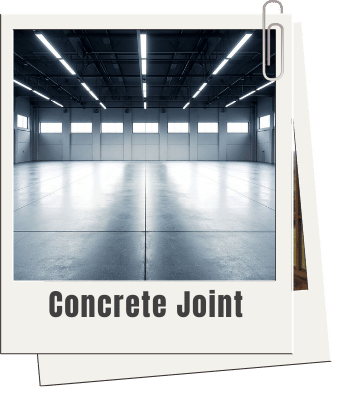
Recommended for sealing various internal or external movement and connection joints, horizontally or vertically, in buildings or civil infrastructures. Examples include concrete joints like precast wall panel joints, expansion joints, control joints, connection joints, etc. It is also ideal for window and door frame perimeter sealing especially when the sealant needs to be painted over.
Other common applications include sealing of FRC panel systems, aluminium, masonry, brick, porcelain, coated metal, finished wood, epoxy and polyester panels, UPVC, polystyrene, and stainless steel.
* Users are responsible to carry out test prior to installation to confirm compatibility with actual substrates, work conditions, and service requirements.
Remove all residual dirt, laitance, rust, grease, oil, frost, water, old sealant, or any other loose and foreign materials thoroughly.
For a neat finish and less clean up works, apply masking tape and remove it before sealant skins over.
It is difficult for any sealants to bond to very porous substrates such as rough concrete. For excellent adhesion of sealant on porous substrates, apply a layer of epoxy paint on joint face as primer coat.
Cut the nozzle to desired bead width at 45° angle, place the nozzle into the caulking gun and screw tight.
Apply sealant into the bottom of the joint so that it completely fills the joint, wetting both joint faces, before moving the caulking gun. Avoid moving too quickly and leave air traps in joint. Do not simply lay a bead on the surface as the sealant will not penetrate the joint by itself. Use backer rod or bond breaker tape in joint to avoid three-sided bonding.
Tool the sealant immediately after application to provide a smooth finish, and to ensure the sealant wets both joint faces for proper bonding. Sealant tooled in a concave profile is recommended. Use of soap or water as tooling aids is not necessary.
If painting over the sealant is necessary, wait at least 24 hours if the sealant thickness is less than 3mm, or 48 hours for thicker applications.
Uncured sealant can be cleaned up with solvent or mineral spirit. Cured sealant can only be removed mechanically.
Joint Design
Joint design should take various factors into considerations, like type of adjacent substrates, temperature changes, etc., please refer to ASTM C1472 for details.
Sealant should be applied in bead size that complies with the movement capability of the sealant (+-50%) in relation to the anticipated joint width due to joint movements.
In general, for joint width
between 6 to 12 mm, width:depth ratio = 1:1
between 12 to 25 mm, width:depth ratio = 2:1
between 25 to 50 mm, sealant depth is =<13 mm.
If sealant is applied in a corner/fillet joint profile, ensure a minimum of 6 mm bonding on both sides of the substrates.
Sealant coverage per cartridge / sausage depends on actual joint width and depth, application style and wastages during application. Calculations can only be a rough reference.
Joint Width
Joint Depth
Coverage (600 ml) **
0.6 cm
0.6 cm
1,587 cm
1.0 cm
1.0 cm
571 cm
2.0 cm
1.0 cm
286 cm
** Based on 5% wastage assumption. Actual coverage may vary. Formula:
Coverage = V / [ W x D x 1.05 ]
Coverage = linear run in cm per cartridge (or sausage)
Store properly in a dry and well-ventilated place with temperature between +5°C to +30°C.
Use within 12 months from date of production.
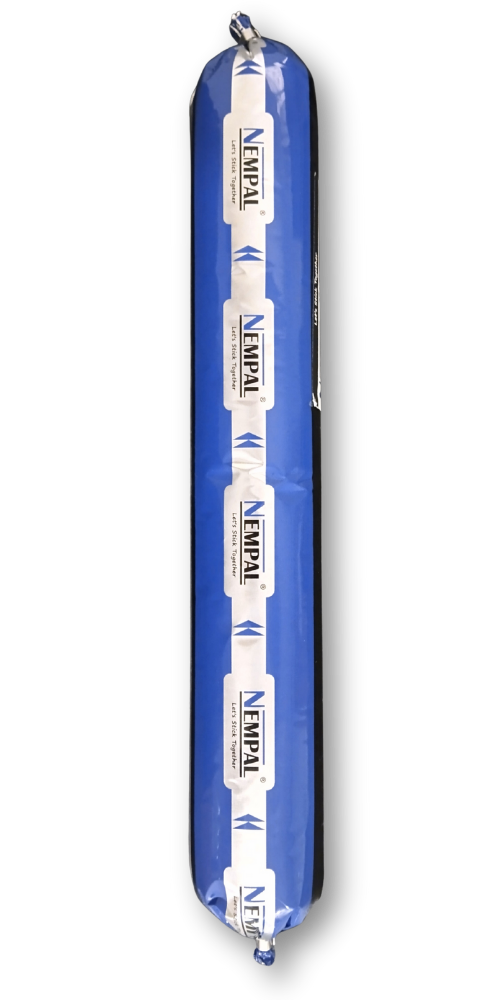
Sausage – 600 ml (20 sausages / carton)
Always test before use – user is responsible to test before using to confirm the sealant produces desirable results.
Contains aminosilane. May produce an allergic reaction. Keep out of reach of children. For further health and safety information, please refer to the latest Safety Data Sheet.
It is NOT recommended for the following applications:
Glass substrates exposed to UV
Polyethylene, polypropylene, and polytetrafluoroethylene (Teflon).
Materials that leach oil, plasticizers or solvents or release by-products that may inhibit the curing of sealant, affect its adhesion, or discolor the sealant.
Paint over with below paint systems:
Alkyd resin paint – cure inhibition to the paint
Chlorinated paint – staining issue
Oil based paint – not compatible
Non-flexible paint systems may impair the elasticity of the sealant. Paint cracks may manifest on parts painted over sealant face.
Depending on the type of paint used, fluid migration from sealant to paint film may occur, causing the paint film to become ‘tacky’ and adhere more air-borne dust.
Continual exposure to aggressive solvents or chemicals.
Sealant colour variations may occur (especially white sealant) due to varying degree of exposure to UV radiation or chemicals during service. This is only an aesthetical effect and does not adversely impact the service performance or durability of the product.
In unventilated areas, or at low temperatures as the moisture content in the air is lower, the curing reaction will take place more slowly.